
Quick answer
Feel where the cold patch is. Cold at the top and warm at the bottom means air is trapped, so bleed the radiator. Warm at the top and cold along the bottom usually means sludge has settled inside it, and bleeding won't shift that. If one radiator stays cold all over while the rest of the house is warm, look at its valves first. If every radiator is cold, the fault is at the boiler or the controls.
Bleeding lets water out, so check the boiler pressure afterwards. Worcester Bosch says it should read between 1 and 1.5 bar with the system cold.
The heating's back on for the winter and one radiator isn't pulling its weight. Before you reach for the phone, put your hand on it and feel where the heat stops, because that tells you most of what you need to know. Cold at the top is air, and a two-minute job with a radiator key. Cold along the bottom is sludge, and no amount of bleeding will touch it. Cold all over usually means a valve. Here's how to read your radiators, the fixes you can safely do yourself, and when it's worth getting a heating engineer in.
Feel the radiator first
Put the heating on and give it twenty minutes to warm right through. Then run your hand over each radiator, top to bottom and end to end. Go carefully, because a working radiator can be too hot to hold. Where the cold sits is the clue:
- Cold at the top, warm at the bottom. Air is trapped in the top of the radiator. Bleed it.
- Warm at the top, cold along the bottom. Sludge has settled in the bottom of the radiator and the hot water runs over it.
- Cold in the middle, warm at the ends. Usually sludge again, built up across the middle of the panel.
- Cold all over while the rest of the house is warm. Hot water isn't getting into it at all. Suspect the valves first.
- Warm near the boiler, cold at the far end of the house. The heat runs out before it gets there. The system needs balancing, or the pump is struggling.
- Every radiator cold. It isn't the radiators. Check the boiler, its pressure and the heating controls. Our guide to hot water but no heating goes through those checks.
Cold at the top: air in the radiator
Air gets into every heating system over time, and because it's lighter than water it gathers at the top of the radiators, where the hot water should be. Upstairs radiators get it worst, because they're the highest point in the system. You'll often hear it before you feel it, as a gurgle or a trickle when the heating comes on. Worcester Bosch puts a radiator that's cold at the top down to trapped air, and the fix is bleeding it. You can do that yourself with a radiator key from any hardware shop.
How to bleed a radiator
These are the steps from Worcester Bosch's guide to bleeding a radiator, with a few notes of our own:
- Find the ones that need it. With the heating on, note which radiators are cooler at the top than the bottom.
- Turn the heating off and let them cool. Water from a hot radiator can scald.
- Fit the key to the bleed valve, the small square screw at one top corner, and hold a folded cloth underneath it.
- Turn the key anti-clockwise. A quarter of a turn is usually enough. You'll hear the air hiss out.
- Close it when water comes out in a steady flow, turning the key clockwise. Snug is enough, because overtightening can damage the valve.
- Do the same on any others, then put the heating back on and check each one is warm all over.
- Check the boiler pressure. Worcester Bosch warns that bleeding radiators can lose pressure, so top it up if the gauge has dropped.
Topping up the boiler pressure
Most combi and system boilers have a pressure gauge on the front or underneath. Worcester Bosch says it should read between 1 and 1.5 bar when the system is cool, and that most systems only need topping up once or twice a year. You top it up through the filling loop, usually a flexible hose with a valve at each end under the boiler, or a built-in lever on some models. Open the valves slowly, watch the needle rise, and close them once it's back in that range. Your boiler's manual shows where yours is.
If you have an older system with a small tank in the loft feeding the heating, there's no gauge and nothing to top up. The tank does it for you.
Cold at the bottom: sludge
This is the one most people mean when they say a radiator isn't heating up properly. The top half is hot and along the bottom it's lukewarm or cold. Worcester Bosch says it can mean sludge has built up inside the radiator and the system needs cleaning.
Sludge is mostly rust from the inside of the radiators and pipes, black iron oxide mixed with whatever else has got into the water over the years. It's heavier than water, so it sinks to the bottom of each radiator and packs down. The hot water comes in over the top of it and the bottom never warms up. Bleeding does nothing for it, because there's no air to let out.
Other signs it's sludge: several radiators doing the same thing, black water when you bleed them, a boiler that bangs or kettles, and a house that takes all evening to warm up. Our power flushing guide goes through them in more detail.
Getting the sludge out
- One bad radiator can come off the wall and be flushed out with a hose outside. It fixes that radiator, so it makes sense when the rest of the house heats properly.
- Several radiators, or the whole house, means the whole system needs cleaning. That's a power flush or a chemical clean, depending on how bad the water is.
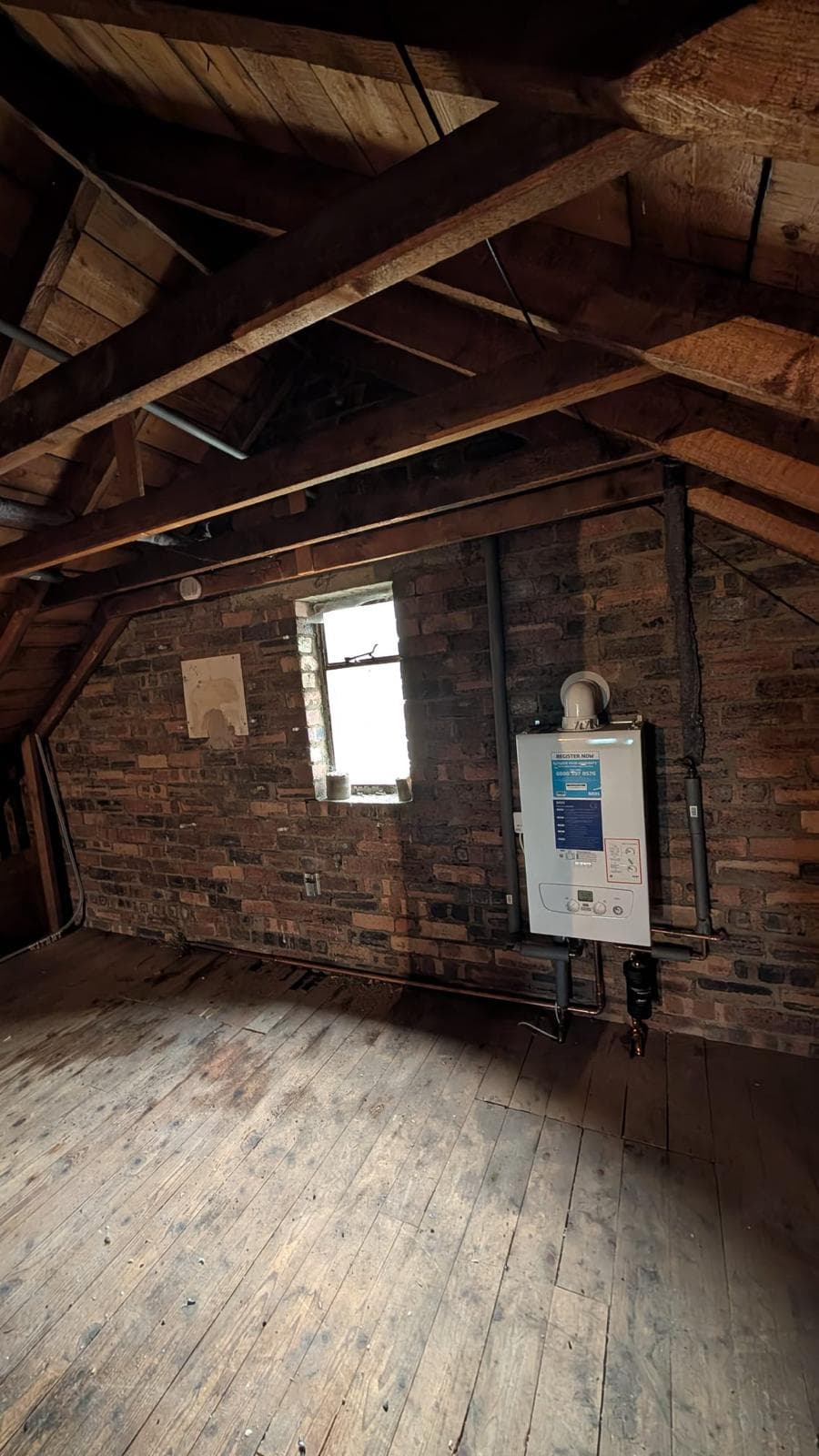
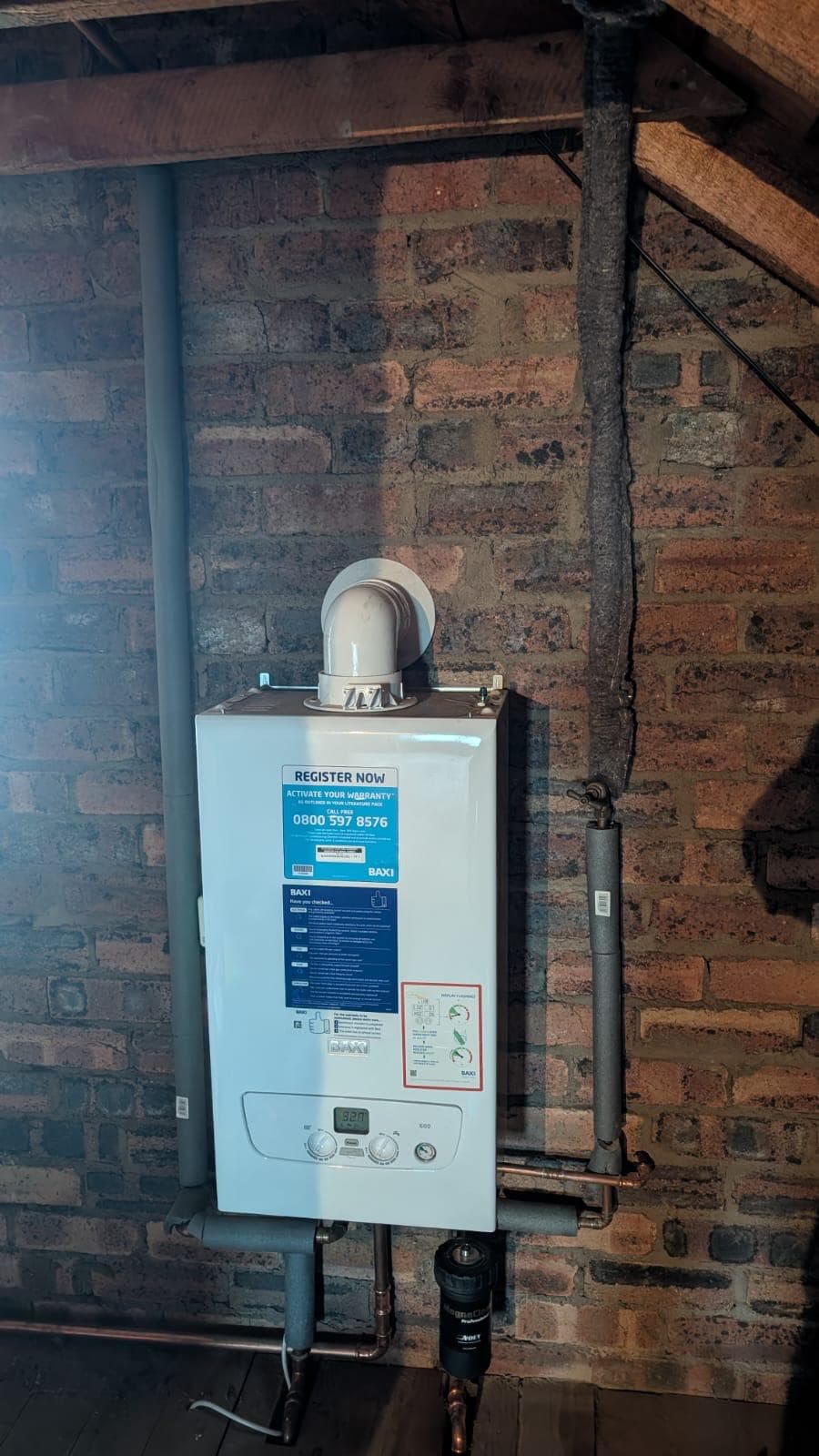
- Then stop it coming back. Once the system is clean it's refilled with corrosion inhibitor, which slows the rust forming again. A magnetic filter on the pipework under the boiler catches the iron particles before they reach the radiators. The black canister in the photo at the top of this page is one, on the pipework under a Worcester Bosch combi we fitted in Livingston.
Across the UK a power flush typically costs £300 to £800, depending on how many radiators you have. On our Platinum and Diamond care plans it's half price.
It doesn't have to be a separate visit. One customer's Checkatrade review from January 2025 explains their boiler was due its annual service and they “also wanted the whole heating system cleaned and flushed out”, so both were done together.
One radiator cold all over
If a single radiator stays cold top to bottom while the others are fine, hot water isn't getting into it. Feel the two pipes at the bottom. If one is hot right up to the valve and stops dead there, the valve is your problem.
- A stuck thermostatic valve. The numbered head on a TRV pushes down on a small pin. After a summer switched off, that pin can stick down and hold the valve shut. Unscrew or unclip the head, press the pin gently and see if it springs back. A few presses often frees it. Don't grip it with pliers, because a snapped pin means a leak as well as a cold room.
- A closed lockshield valve. That's the valve at the other end, under a plastic cap, which you can't turn by hand. It sets how much water the radiator gets. It sometimes gets closed off when a radiator comes off the wall for decorating and isn't opened back up the same amount.
- So much sludge that nothing gets through. Then the radiator needs flushing out, or replacing if it's badly corroded.
- Air, if it's upstairs. A radiator at the top of the house can be so full of air that it's cold all over. Try bleeding it first.
Valves wear out too, and an old one can start to weep at the joint. One customer's Checkatrade review from December 2024 says our engineer “quickly diagnosed the leaking radiator was due to a faulty valve which he replaced and stopped the leak.”
Warm near the boiler, cold at the far end: balancing
Hot water takes the easiest route round the house. If a system has never been balanced, the radiators nearest the boiler get most of the flow and the ones at the end of the run get what's left. You see it as a kitchen that roasts and a back bedroom that never warms up, or radiators that heat one after another, slowest at the far end.
Balancing means setting the lockshield valve on every radiator so the flow is shared out properly. It's done with the heating running and a thermometer on the pipes at each radiator, adjusting the valves one at a time. It takes time rather than parts, and it's worth doing whenever radiators have been changed, moved or added. It's part of our central heating work.
If balancing doesn't help, look at the pump. A circulating pump that's wearing out, or set too low, can't push the water far enough to reach the last radiators. That's one for an engineer.
When to stop and call someone
Bleeding, checking the pressure and freeing a TRV pin are all safe to do yourself. Call a heating engineer when:
- Water is leaking from a valve, a joint or the radiator itself. Put a bowl and a towel under it. A pinhole in the radiator panel means it has corroded through and needs replacing.
- The pressure keeps dropping and you're topping it up more than once or twice a year. Worcester Bosch says to contact your installer if you're repressurising much more often than that. The water is going somewhere.
- The pressure climbs into the red when the heating is hot, or water drips from the small pipe outside that comes from the boiler. Check the filling loop valves are fully closed, and if they are, get it looked at.
- Bleeding brings out black water, or several radiators are cold along the bottom. That's sludge.
- A radiator is still cold after you've bled it and checked both valves.
- Anything inside the boiler's casing. That's work for a Gas Safe registered engineer, legally as well as practically.
Radiator and heating repairs in Kirkcaldy and across Fife
We're a Gas Safe registered plumbing and heating team based in Kirkcaldy, covering Glenrothes, Leven, Dunfermline and the rest of Fife, plus Edinburgh and the Lothians. If you're getting someone out for one cold radiator, ask them to look over the others while they're there. One customer's Checkatrade review from August 2024 says Liam “gave some advice about radiators generally and had a look at the other ones while he was at it.”
Our Gold care plan, at £20 a month, covers your radiators, pipes and valves as well as the boiler and central heating system. Every plan comes with no call-out fee and no excess.
Radiators still cold?
Tell us which radiators are cold and where the cold patch is. We'll find out why and give you a clear price before we start on the fix.
Liam, First Plumb Solutions
Owner & Gas Safe engineer
Liam runs First Plumb Solutions, a Gas Safe registered plumbing and heating team based in Kirkcaldy. The team has spent 14 years fitting boilers, bathrooms and heating for homes and businesses across Fife and East Scotland.