
Quick answer
If your heating works but you have no hot water, the boiler is firing, so the fault is on the hot water side. On a combi boiler the usual causes are a diverter valve stuck on the heating side, a faulty flow sensor or a blocked plate heat exchanger. On a system with a hot water cylinder, check the programmer first, then the cylinder thermostat and the motorised valve.
Find out whether you have a combi or a cylinder before anything else, because the faults are different.
The radiators are warm, the house is heating up nicely, and the hot tap runs cold however long you leave it. It feels like the boiler is half broken, but the symptom tells you a lot. If the heating works, the boiler is getting gas, lighting and heating water, and the pump is moving it round the house. The big, expensive parts are doing their job. What's failed sits on the hot water side, and that's a short list. This guide shows you how to narrow it down, the checks you can do yourself, and what a repair usually costs.
First, find out which system you have
Almost everything about this fault depends on how your home makes its hot water, so start here. It takes thirty seconds:
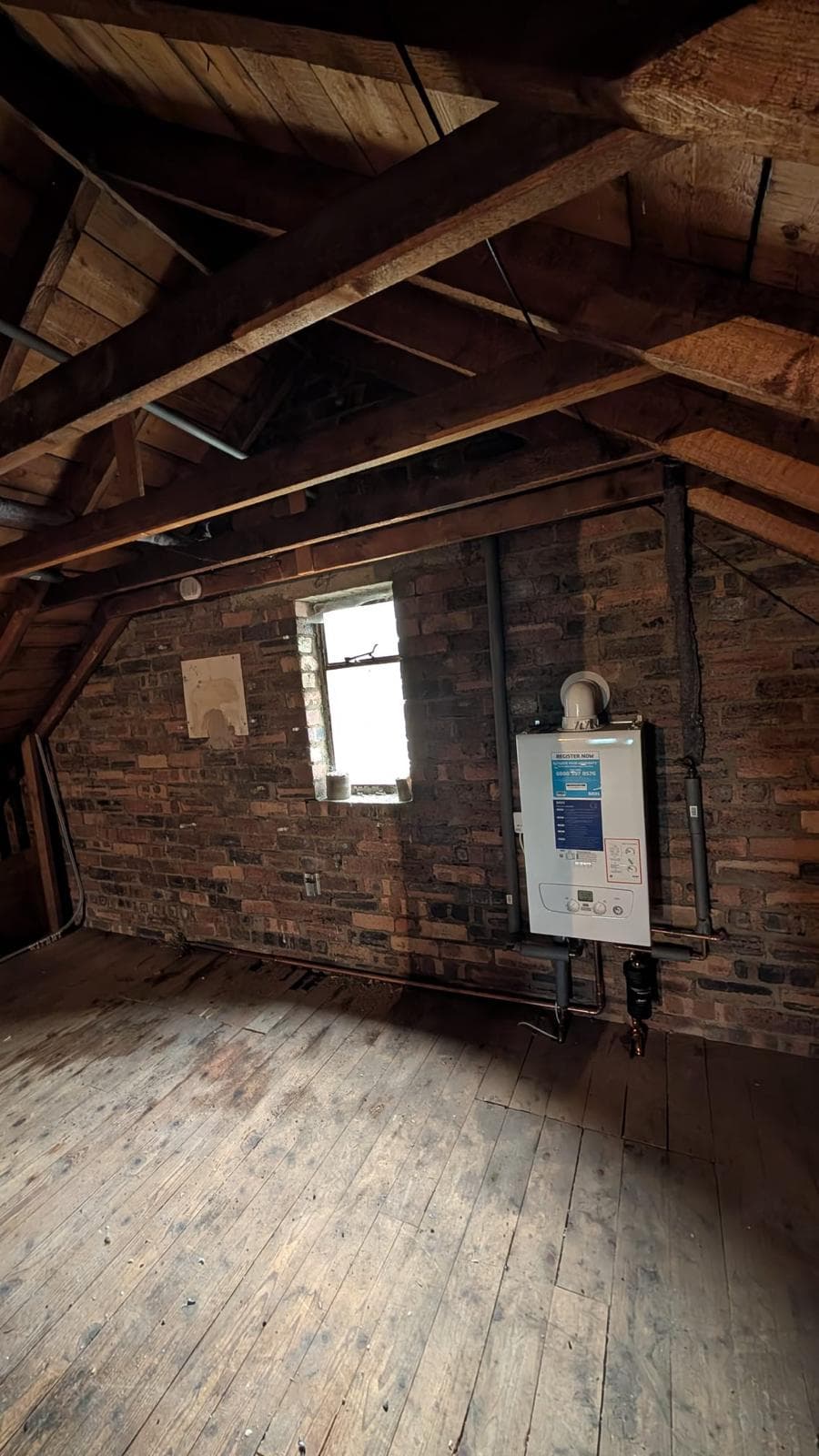
- A combi boiler. There's no hot water tank anywhere in the house. The boiler heats water straight from the mains the moment you open a hot tap. Most flats and smaller houses have one.
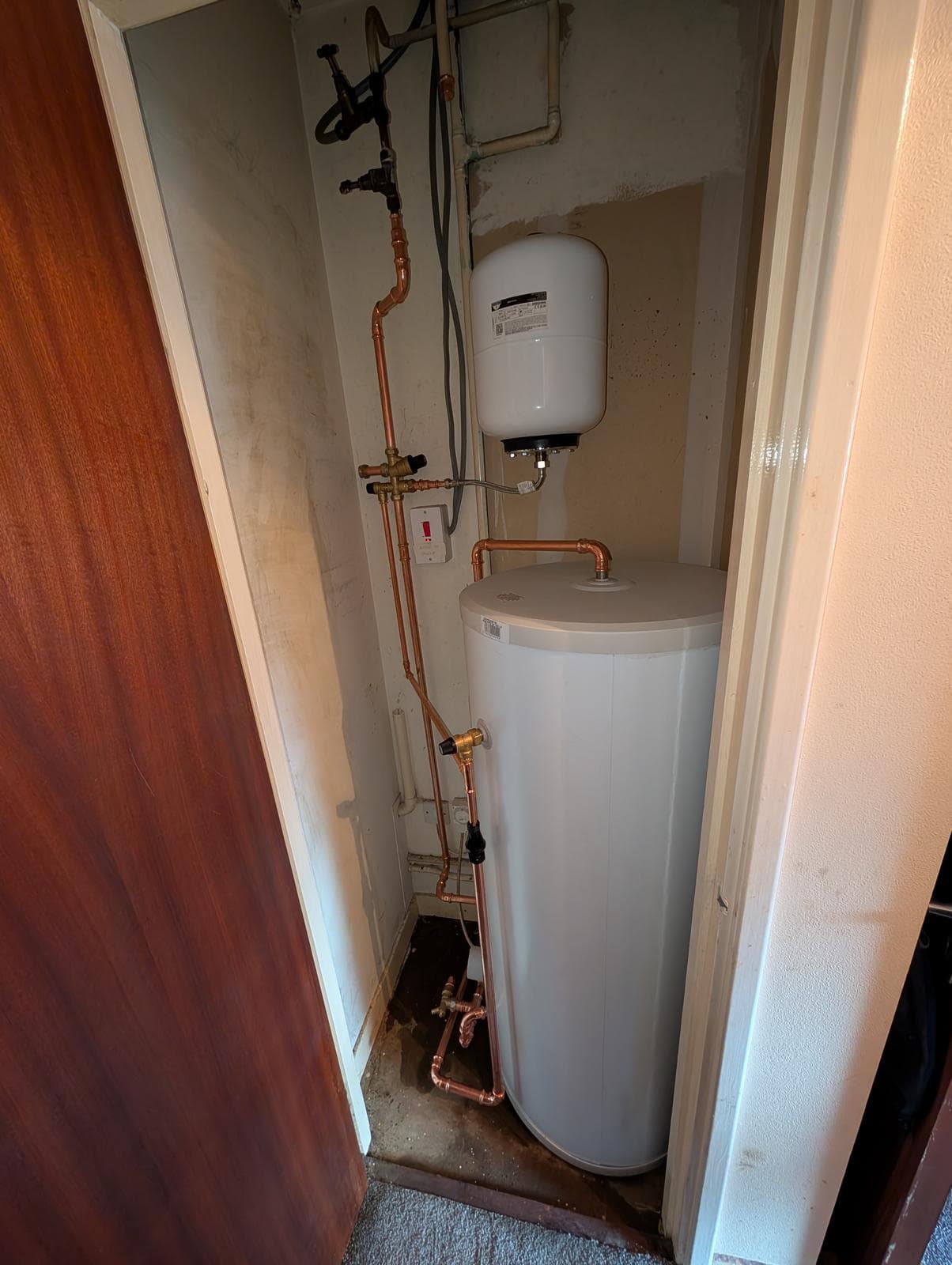
- A system or regular boiler with a cylinder. There's a hot water cylinder in an airing cupboard or the loft, either bare copper or an insulated tank. The boiler heats the water in the cylinder and you draw on what's stored. Older systems also have a cold water tank in the loft.
If you have a combi, the combi section below is the one to read. If you have a cylinder, skip to the cylinder section. The quick checks apply to both.
The quick checks, before you call anyone
Work through these first. Between them they catch out more people than any boiler fault:
- Is it every hot tap, or just one? If the kitchen tap runs hot and the shower doesn't, the boiler is fine. The fault is in that tap, the shower valve or its cartridge, and it's a plumbing repair rather than a boiler one.
- Are the cold taps running at full strength? A combi needs a decent flow of mains water before it will fire for hot water. If the cold is weak too, the problem is the supply coming into the house, not the boiler. Check the stopcock is fully open, and whether Scottish Water has works on in your street.
- Is the hot tap open far enough? On a combi, a tap barely cracked open may not move enough water for the boiler to notice. Open it fully for twenty seconds and listen for the boiler firing.
- Has the hot water temperature been turned down? Most combis have a separate dial or button for hot water. If it's been turned right down, or the boiler has been put into an eco or summer mode, the water can come out barely warm.
- Is the programmer set to bring the hot water on? On a cylinder system the hot water usually has its own timer. The clocks going back at the end of October, a power cut or a stray button press can leave it switched off while the heating carries on.
- Is the boiler showing a fault code? Write it down before you reset anything. The manual or the maker's website will tell you what it means, and it saves time when an engineer comes out.
What the symptom is telling you
How the hot water fails is the best clue to why. As a rough guide:
- Combi, and nothing happens when you open a hot tap. The boiler doesn't fire at all. Suspect the flow sensor, or a weak mains water supply.
- Combi, and the boiler fires but the water stays cold. Most likely the diverter valve, stuck on the heating side.
- Combi, and the water is lukewarm or goes hot, cold, then hot again. Usually a blocked plate heat exchanger or a faulty hot water sensor.
- Hot water at some taps but not others. The tap, the shower valve or its cartridge, not the boiler.
- Cylinder, and the immersion heats the water but the boiler won't. The motorised valve or the cylinder thermostat.
That's a guide to the usual suspects rather than a diagnosis. A good engineer tests a part before replacing it.
Combi boilers: the three usual culprits
A diverter valve stuck on the heating side
A combi has one burner and two jobs. The diverter valve decides which job gets the heat. It sits on the heating side most of the time and swings across to hot water whenever you open a hot tap. If it sticks on the heating side, the radiators keep all the heat and the taps get none. One tell-tale sign: with the heating switched off, the radiators start to warm up when someone runs a hot tap.
It's the same part behind the opposite fault, when it sticks the other way, which we've covered in hot water but no heating. Depending on the boiler, a worn diverter is fixed with a new valve cartridge or a new motor head, and it's a routine boiler repair rather than a big one.
A faulty flow sensor
When you open a hot tap, a small sensor inside the boiler detects the water moving and tells the boiler to fire. If that sensor fails, or the little turbine inside it jams with debris, the boiler never knows you want hot water. You open the tap and nothing happens: no click, no burner, just cold water. The heating carries on as normal because it doesn't rely on the sensor. The part itself is inexpensive, which makes this one of the cheaper fixes on the list.
A blocked plate heat exchanger
The plate heat exchanger is a small block of thin metal plates that passes heat from the boiler's heating water into your tap water without the two ever mixing. As it blocks up, the hot water goes lukewarm, or swings between hot and cold, well before it stops altogether. The heating usually carries on fine, because it runs through a separate, larger heat exchanger.
In hard water parts of the UK the usual cause is limescale on the tap water side. Most of Scotland's tap water is soft, so limescale is less of a problem here, and sludge from the heating side clogging the plates is a common culprit instead. Depending on its state, it can be flushed or replaced. If the system is full of sludge, a power flush stops a new one blocking up the same way.
Less often, it's the hot water temperature sensor or a fault on the boiler's circuit board. Both take an engineer with a meter to find.
Cylinder systems: check the controls first
With a hot water cylinder, the boiler heats the water in the tank through a coil, and a set of controls decides when. If the heating works and the hot water doesn't, the controls are the place to look:
- The programmer. Check the hot water channel is on, or set to come on, and that the clock shows the right time. Press the hot water boost or advance button if there is one, give it half an hour and see whether the cylinder starts to warm.
- The cylinder thermostat. A small dial strapped to the side of the cylinder. If it's been knocked down, the boiler stops heating the water too early. It should be set to around 60°C. Don't set it lower, because water stored below that temperature can grow legionella bacteria.
- The motorised valve. On most cylinder systems, one or two motorised valves send the boiler's heat to the radiators, the cylinder or both. The motor heads on these valves burn out with age, and when the hot water side goes you get exactly this fault: warm radiators and a cold cylinder. A new motor head is a common and fairly quick repair.
- An airlock in the cylinder coil. Less common, but after work on the system or a refill, air can get trapped in the coil so the heat can't reach the water. It usually needs an engineer to vent it properly.
Immersion heaters fail in their own right too, usually the element or its thermostat. It's a common job for us. One customer's Checkatrade review from March 2025 describes a visit that involved “flushing the water tank, replacing the immersion heater, and fixing a faulty washer”.
What does it cost to fix?
Cost follows the part, and the part follows the diagnosis, so be wary of anyone who quotes a repair over the phone. As a guide to what's normal:
| The fix | Typical cost | What's involved |
|---|---|---|
| Resetting the controls or hot water temperature | Free | A DIY job in most houses |
| Flow sensor replacement | £80 – £200 | A small part, most of the cost is labour |
| Diverter valve repair or replacement | £150 – £400 | New cartridge or motor head, plus labour |
| Plate heat exchanger flush or replacement | £150 – £400 | Flushed if it can be, replaced if not |
| Motorised valve or motor head | £150 – £300 | Common on cylinder systems |
| Cylinder thermostat | £100 – £180 | Fitted to the side of the cylinder |
| Immersion heater element | £150 – £300 | More on an unvented cylinder |
| Circuit board (PCB) replacement | £350 – £600 | Worth weighing against a new boiler |
Those are market ranges rather than our quote. If the fault turns out to be a circuit board on a boiler already past twelve or thirteen years old, price a new boiler alongside the repair before you commit. Sometimes the repair is still the right call, and we'll tell you which one you're looking at.
Get a second opinion before a big repair
Not every worrying diagnosis is right. One customer called us after another company's engineer had told them their system was unsafe. Our engineer gave the hot water and heating a thorough check and, in the customer's words from their Checkatrade review, “explained the system was fine and no remedial work was required.”
If you've been quoted for a big repair or a new boiler over a hot water fault, it's worth a second look before you spend the money. A good engineer will test the part before replacing it and show you why it has failed.
When to stop and call someone
The checks above are safe for anyone to do. These are not:
- You can smell gas. Turn the gas off at the meter, open the windows and get everyone out. Don't smoke or light anything, and don't touch electrical switches, on or off. Call the National Gas Emergency Service on 0800 111 999 before anyone else.
- Water is leaking from the boiler or the cylinder, or anywhere near the electrics.
- Hot water is running from a tundish or an overflow pipe on a cylinder. Switch the boiler and the immersion off.
- The boiler keeps locking out and needs resetting again and again.
- Anything inside the boiler's casing. Don't take the case off or touch the parts inside. That's work for a Gas Safe registered engineer, legally as well as practically.
- Someone vulnerable is at home. A few days without hot water is a nuisance for most of us. With a baby, an elderly relative or someone unwell in the house, treat it as urgent and say so when you ring.
Hot water repairs in Kirkcaldy and across Fife
We're a Gas Safe registered plumbing and heating team based in Kirkcaldy, covering Fife, Edinburgh and the Lothians. We find hot water faults on combi, system and regular boilers, and on the cylinders and controls that go with them, and we give you a fixed price before we start. There's more on our boiler repair page, and if it can't wait, our 24hr emergency line is a real one rather than an answerphone.
If you'd rather not be without hot water again next winter, our care plans cover your boiler and central heating system from £15 a month, with no call-out fee and no excess.
Radiators warm, taps cold?
Tell us what the boiler is doing and we'll come out, find the fault and give you a fixed price to fix it before any work starts. We work on all the major makes, whoever fitted the boiler.
Liam, First Plumb Solutions
Owner & Gas Safe engineer
Liam runs First Plumb Solutions, a Gas Safe registered plumbing and heating team based in Kirkcaldy. The team has spent 14 years fitting boilers, bathrooms and heating for homes and businesses across Fife and East Scotland.